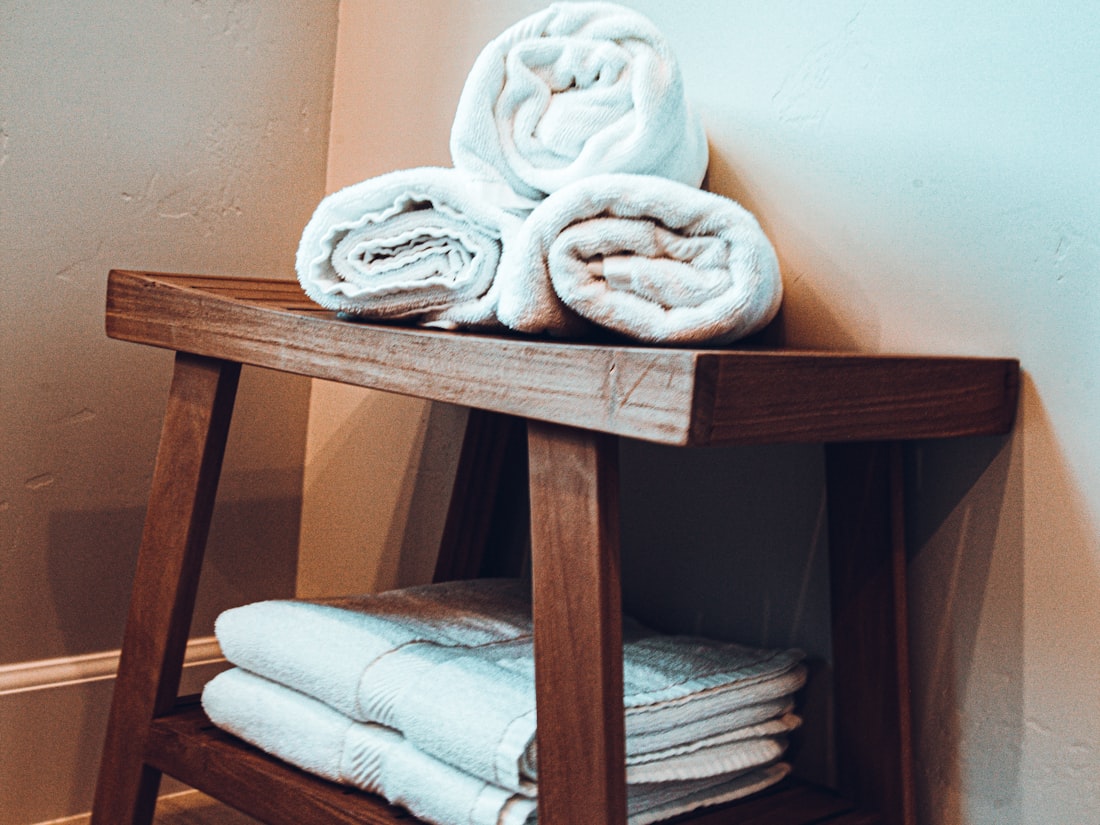
Ask most people what makes a towel clean and they'll point at the obvious things: no marks, a fresh smell, a soft handle. Those matter for how a towel feels, but none of them prove it's hygienic. A towel can tick all three and still be carrying what the last guest left behind.
For a sauna, spa or salon, that gap is the whole game. Your guests are warm, often bare-skinned, sometimes mid-treatment. Linen is the single thing that touches nearly all of them. Get it right and nobody notices. Get it wrong and you're trusting luck.
Clean is what a towel looks like. Hygienic is what it can prove.
It's the temperature, not just the detergent
The instinct is to credit a good-smelling towel to a good detergent. In commercial laundering, the heavy lifting is done by thermal disinfection, holding the wash at a high enough temperature for long enough to kill the microorganisms that survive a gentle domestic cycle.
A 30°C eco wash at home is wonderful for your energy bill and useless for sanitising a gym towel. Commercial hygiene practice leans on sustained heat, and where heat alone isn't appropriate for the fabric, on validated chemical disinfection instead. The point isn't one magic number; it's that the process is chosen to disinfect, not just to freshen.
Drying is half the job
Here's the step everyone forgets. A towel that's washed perfectly and then left even slightly damp, folded warm, stacked too soon or stored in a humid back room, becomes the ideal home for bacteria to multiply again. Damp is where freshness goes to die.
Proper commercial drying takes linen fully dry, quickly, and finishes it before it can sit. That's also what gives a towel that warm, lofty feel, the same heat that protects it makes it pleasant to hold.
Turnaround is a hygiene feature, not a convenience
The longer used linen sits before it's washed, the more it works against you: set stains, lingering odour, and a bigger microbial load to deal with. Fast, scheduled turnaround keeps that load low and your shelves stocked. It's why we treat collection rhythm as part of hygiene, not separate from it.
Cross-contamination: the invisible failure
Even immaculately washed linen can be undone on the way back to your shelf, carried in the same bag as soiled items, folded on an unclean surface, handled without care. A serious laundry keeps clean and dirty linen strictly apart, at every step, including delivery. If you can't see how that separation happens, assume it doesn't.
What to ask any linen partner
- How do you ensure linen is actually disinfected, not just washed?
- How is clean linen kept separate from used linen, all the way to my door?
- What's your standard turnaround, and what happens if you miss it?
- How do you handle stains without bleaching towels grey and lifeless?
- Can you keep up with my busiest week, not just my average one?
Good answers sound specific and slightly boring. Vague, breezy answers are the tell.
The standard we hold
At Urban Press Co., hygiene isn't a feature we bolt on. It's the reason the business exists. We launder to commercial hygiene practice, dry and finish fully before folding, keep clean and used linen strictly apart through collection and delivery, and run to a turnaround you can plan around. Your guests will never think about any of it. That's the whole idea.